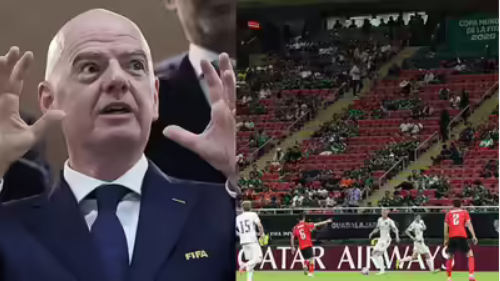
Fierce debate has erupted following claims from FIFA that empty seats observed during a World Cup match in Mexico were due to fans “being in the concourses,” a statement that has sparked widespread criticism and renewed discussion about stadium management and tournament presentation.
The match, held in a packed Mexican venue known for its passionate atmosphere, initially appeared on broadcasts to show noticeable gaps in seating sections despite strong ticket demand. The visual contrast quickly circulated online, prompting questions from viewers about attendance levels at one of football’s most high-profile tournaments.
In response, FIFA officials attributed the apparent emptiness to spectators temporarily leaving their seats for concessions, rest areas, and stadium concourses during key phases of the match. According to the explanation, high fan movement during halftime and in-game intervals created the illusion of reduced attendance in certain camera angles.
However, the justification has not been widely accepted by critics. Many fans and analysts argue that while concourse movement is normal in any major sporting event, it does not fully explain the scale of empty-looking sections captured during live broadcast. Some have pointed to timing of camera shots, stadium design, and crowd distribution as possible contributing factors.
The situation has reignited broader conversations about how stadium atmosphere is perceived on television versus in-person experience. Modern venues often feature multiple hospitality zones, premium seating tiers, and large concourse facilities, all of which can temporarily reduce visible occupancy during play.
Supporters of FIFA’s explanation insist that such movement is typical in high-capacity stadiums, especially during intense matches where fans frequently move around for food, restrooms, or fan zones. They argue that television broadcasts can sometimes misrepresent the true energy and occupancy inside the venue.
Still, critics maintain that global tournaments must prioritize optics as well as logistics. With billions of viewers watching, any perception of empty seats can quickly become a talking point and overshadow the on-field action. Some have called for improved crowd management strategies or broadcast adjustments to avoid similar controversies in future matches.
As the debate continues, attention now shifts back to the tournament itself, where packed stadiums and vibrant atmospheres remain a defining feature of the World Cup experience. Organizers are expected to face ongoing scrutiny over how attendance and stadium presentation are communicated during live coverage.
For now, the incident stands as another reminder of how quickly perception, technology, and global broadcasting can shape narratives far beyond the pitch.
Leave a Reply