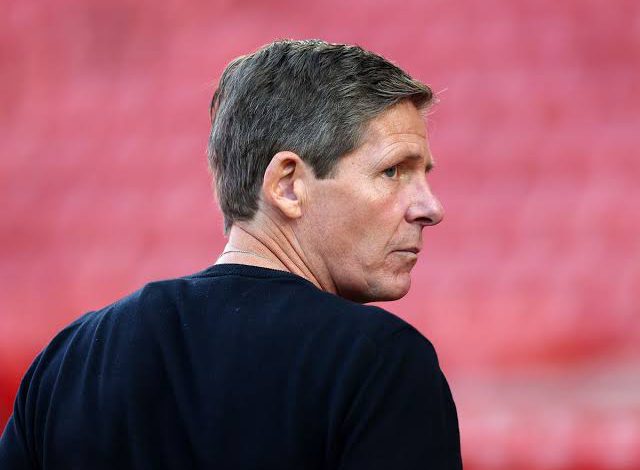
Oliver Glasner Faces a Big Test at Nottingham Forest as Pressure Begins to Build
Oliver Glasner arrived at Nottingham Forest with a big reputation, high expectations and a clear idea of how he wanted his new team to play.
But after only a few competitive matches, the Austrian coach has already discovered that rebuilding Forest will not be as simple as changing the manager.
Glasner was appointed in the summer after an impressive spell at Crystal Palace, where he helped the club win the FA Cup and UEFA Conference League. His success made him one of the most attractive managers available, and Forest were quick to make him the man they believed could take the club forward.
However, the beginning of his Nottingham Forest career has been far from perfect.
Forest lost 1-0 to Leeds United in Glasner’s first Premier League match, before drawing 2-2 away at Liverpool. They then drew 0-0 with Tottenham Hotspur, leaving the club still searching for its first league victory under their new manager.
That record does not tell the whole story, though.
There have been positive signs, and Glasner has repeatedly made it clear that Forest need time to develop into the team he wants.
A difficult start at the City Ground
Glasner’s first competitive match at Nottingham Forest ended in frustration.
Forest dominated possession for long periods against Leeds but struggled to turn that control into clear chances. Just when it looked as though the game would end in a goalless draw, Anton Stach scored a late free-kick to give Leeds a 1-0 victory.
It was a painful way for Glasner to begin his Premier League reign.
The Austrian did not hide his disappointment, but he also understood that major changes could not happen overnight. Forest had already experienced considerable instability before his arrival, with several managers coming and going during the previous season.
That meant Glasner inherited a squad that needed not only tactical changes but also greater consistency and confidence.
He has spoken about the need for patience, stressing that he cannot simply press a button and instantly turn Forest into one of Europe’s best sides.
That message is important because expectations around the club remain high.
Glasner already has a clear identity
One of the biggest reasons Nottingham Forest wanted Glasner was his football philosophy.
The Austrian coach prefers an aggressive style built around a back three, energetic wing-backs, quick transitions and intense pressing. His teams are expected to attack with purpose while remaining compact without the ball.
That approach helped him achieve major success at Eintracht Frankfurt and Crystal Palace.
Forest have already used a 3-4-3 formation under Glasner, and the system appears likely to remain an important part of his plans.
The challenge is getting every player comfortable with his demands.
A new manager can introduce a formation quickly, but building automatic movements and understanding between players takes much longer.
That is particularly important for Forest because Glasner wants his players to be aggressive when they lose possession and quick when they win it back.
The players must understand when to press, when to drop and when to attack the spaces behind the opposition.
Those details can make the difference between a successful Glasner team and one that looks disjointed.
The transfer window has given Glasner important weapons
Forest have also worked to give their new manager the players he needs.
One of the biggest arrivals was Liam Delap, who joined from Chelsea in a deal reportedly worth £45 million, potentially rising to £50 million with add-ons.
Delap gives Glasner another attacking option and provides competition in the forward positions.
The striker’s arrival was also significant because Forest need more goals if they are going to move away from the lower half of the Premier League.
Another major addition was Daniel Muñoz.
The Colombian defender already knows Glasner from their time together at Crystal Palace, and his decision to join Forest was influenced by the opportunity to work with the Austrian again.
That relationship could prove extremely important.
Muñoz understands Glasner’s methods and expectations, which could allow him to settle faster than a player arriving at a completely unfamiliar tactical system.
For Glasner, having at least one player who already knows his football can also help communicate his ideas to the rest of the squad.
The Liverpool draw showed what Forest can do
If the defeat against Leeds was a warning, the 2-2 draw at Liverpool offered Glasner something much more encouraging.
Forest travelled to Anfield and took the lead through Dan Ndoye before Liverpool eventually fought back.
Morgan Gibbs-White then restored Forest’s advantage from the penalty spot, only for Victor Muñoz to score Liverpool’s late equaliser.
Forest were disappointed not to win, but the performance demonstrated that Glasner’s side can cause problems against top opposition.
It was also a sign that his players are beginning to understand how he wants them to approach difficult away matches.
The biggest concern was that Forest could not protect their lead.
That is something Glasner will certainly want to address.
Against the best teams, opportunities can be limited. When a team gets itself into a winning position, it must become more efficient and disciplined.
The Tottenham controversy added more frustration
The goalless draw with Tottenham brought another talking point.
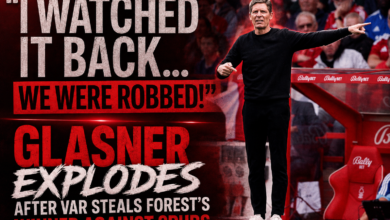
Forest appeared to have taken the lead through Neco Williams, but the goal was ruled out following a VAR review for handball.
Glasner was furious with the decision and questioned whether there was enough evidence for VAR to overturn the original decision.
However, subsequent footage from another camera angle appeared to show that the ball had indeed touched Williams’s hand, although that particular angle was not available to the VAR team during the match. Howard Webb defended the decision based on the evidence available at the time.
For Glasner, the incident was another reminder that fine margins can have a huge impact on a football season.
Forest eventually had to settle for a point.
While a draw was not a disaster, the club still had no Premier League victory under Glasner after the opening matches.
The biggest challenge is consistency
Perhaps Glasner’s biggest job at Forest is not simply improving individual players.
It is creating consistency.
Forest have the talent to compete with many Premier League sides, but talent alone is not enough.
The team needs a clear identity, and that identity must remain visible whether Forest are playing Liverpool, Tottenham, Leeds or one of the promoted teams.
Glasner’s previous success suggests he knows how to build that kind of structure.
At Crystal Palace, he turned the team into a difficult opponent and eventually delivered major silverware.
That experience gives Forest supporters a reason to remain optimistic.
But Forest are a different challenge.
The club has gone through considerable managerial instability, and Glasner is now being asked to provide stability while also improving results.
Morgan Gibbs-White remains crucial
One player who could play a major role in Glasner’s plans is Morgan Gibbs-White.
The Forest captain remains one of the team’s most important creative players.
Glasner needs Gibbs-White operating in positions where he can influence matches, create chances and contribute goals.
The midfielder has already shown his importance by scoring from the penalty spot against Liverpool.
If he can stay fit and maintain his best form, he could become the central figure around which Glasner builds the attack.
The manager also needs his forwards to become more clinical.
Forest have created opportunities but have not always made the most of them.
That is an area that could determine whether they spend the season fighting near the bottom or pushing towards the middle and upper half of the table.
Glasner needs time, but results still matter
There is a balance Glasner must find.
On one hand, it would be unfair to judge him too harshly after only a handful of matches.
On the other hand, Premier League managers are ultimately judged by results.
Forest supporters will understand that Glasner needs time to implement his ideas, but they will also expect improvement.
The club cannot afford another season of constant managerial changes.
That is one reason why Glasner’s appointment is so important.
If he succeeds, Forest could finally have the stability they have been searching for.
The manager has already shown that he can build a winning team. He now has to prove that he can do it at the City Ground.
The road ahead
Forest’s next Premier League match is away to Aston Villa on September 12.
It represents another difficult test for Glasner and his players.
A victory would immediately change the mood around the club.
It would give Glasner his first league win and provide evidence that his project is beginning to move in the right direction.
A defeat, however, would increase the pressure, particularly after the slow start.
But the most important thing for Forest is not to panic.
The club appointed Glasner because of what he achieved before arriving in Nottingham.
He needs the opportunity to build his own team, establish his tactical principles and develop a squad capable of competing consistently in the Premier League.
There will inevitably be difficult moments along the way.
The question is whether Forest can remain patient when those moments arrive.
Glasner has already shown flashes of what he can bring. The draw at Liverpool demonstrated Forest’s potential, while the narrow defeat against Leeds and the controversial Tottenham draw highlighted the fine margins they must improve.
The next stage is turning those promising moments into victories.
For Nottingham Forest, the Glasner era is still in its early stages.
The Austrian has inherited a club with ambition, a passionate fan base and a squad capable of competing at this level.
Now comes the difficult part.
He must turn that potential into consistent performances and results.
If he can do that, Forest may finally have the manager capable of giving them the stability and success they have been searching for.
But if the early results continue to disappoint, the pressure will only grow.
For now, Glasner has one clear task: build, improve and start winning.
And Forest supporters will be watching closely to see whether their new manager can deliver.