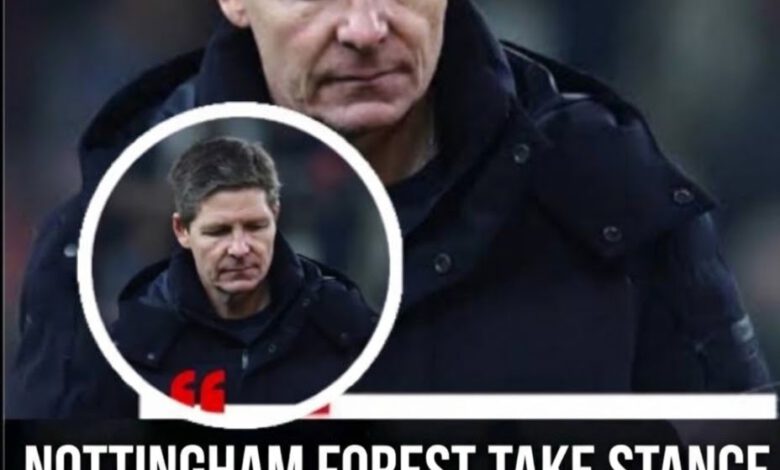
Nottingham Forest have delivered a firm and unambiguous message of support for head coach Oliver Glasner amid a challenging start to the 2026/27 Premier League season. Following weeks of speculation and mounting pressure after a string of disappointing results, the club’s hierarchy have moved to publicly reaffirm their belief in the Austrian, issuing what sources describe as a “clear and unified” stance on his future at the City Ground.
The timing of the update is significant. Forest currently sit 16th in the Premier League table with nine points from ten matches — a record of two wins, three draws and five defeats. While a sensational 3-1 victory over Manchester City on 7 November provided a timely boost, the overall picture remains one of inconsistency, with the team having spent several weeks hovering dangerously close to the relegation zone.
Yet rather than panic, the board have chosen to double down on their man. Multiple sources close to the club’s decision-makers have outlined a consistent and supportive position regarding Glasner’s role, his methods, and the long-term vision they believe he is uniquely positioned to deliver.
A Season of Struggle and Signs of Promise
The 2026/27 campaign has been far from straightforward for Nottingham Forest. After a difficult opening period that included a home defeat to Leeds United and a hard-fought draw at Liverpool, the side briefly climbed the table with a valuable away win at Aston Villa. That progress proved short-lived. Consecutive losses to Coventry City, Crystal Palace and Arsenal, followed by a damaging 2-0 defeat at Brentford, left Glasner’s side languishing in the bottom three.
The Brentford result proved a particular low point. Forest were outfought and outthought, prompting an unusually forceful response from their head coach. Glasner publicly declared that the time for compromises was over, stating that players who failed to fully buy into his demands would have no future at the club. He even suggested that failure to improve could lead to him becoming the latest managerial casualty in a turbulent recent history at the City Ground.
That public display of frustration might have unsettled some boards. At Forest, however, it appears to have had the opposite effect.
Just days later, the team responded in the best possible way, producing a high-energy, clinical performance to defeat Manchester City 3-1 at the City Ground. The result not only lifted Forest to 16th but also offered tangible evidence that Glasner’s methods are beginning to take hold. Liam Delap’s brace and a much-improved collective display suggested that the squad is starting to understand and execute the high-intensity, structured style the Austrian demands.
Still, the overall numbers remain modest. Nine goals scored and 13 conceded from ten games highlight ongoing issues with both creativity in the final third and defensive concentration. Expected goals data has often painted a more positive picture than the results themselves, suggesting that Forest have frequently controlled matches without converting dominance into points — a classic transitional symptom for a side adapting to a new coaching philosophy.
The Board’s Clear Stance: Three Distinct Verdicts
In the aftermath of both the Brentford defeat and the subsequent City victory, senior figures at the club have been at pains to stress their continued faith in Glasner. Sources close to the hierarchy have provided a series of clear statements that together form a coherent and supportive position.
The first and most emphatic verdict came from a senior board member who spoke on the condition of anonymity. “Oliver is exactly the coach we brought in to change the culture at this football club,” the source said. “We did not appoint him to manage short-term results or to keep everyone happy. We appointed him because he has proven, at the highest level, that he can transform a team’s identity and deliver success. The early difficulties were expected. What matters is the direction of travel, and we are completely aligned with him on that.”
A second source, described as being closely involved in football operations, offered a more detailed assessment of Glasner’s approach. “There is full board backing for Oliver and the standards he is setting,” the individual explained. “His reaction after Brentford was not seen as a negative. Quite the opposite. The hierarchy welcomed the strength of his message. This club has suffered for too long from a lack of consistent standards and a revolving door of managers. Oliver is the man tasked with ending that cycle, and the board believe he has both the personality and the tactical quality to do it.”
A third perspective, provided by a figure with knowledge of owner Evangelos Marinakis’ thinking, focused on the long-term vision. “The owner’s ambition has always been clear: Nottingham Forest should be competing at the top end of the Premier League and challenging for European qualification on a regular basis,” the source stated. “Oliver Glasner was chosen because he shares that level of ambition and has the track record to match it. The board’s stance is simple. He has their complete confidence. There is no appetite for another managerial change. The focus is on giving him the time and support required to implement his vision fully.”
These three verdicts — emphasising cultural change, the positive reception of Glasner’s demanding standards, and long-term strategic alignment — represent the clearest public indication yet of the board’s position. Rather than viewing the slow start as a reason for doubt, the hierarchy appear to regard it as an inevitable part of a necessary transformation.
Why the Board Believe Glasner Is the Right Man
To understand the depth of the board’s conviction, it is necessary to examine both Glasner’s pedigree and the specific challenges facing Nottingham Forest.
Glasner arrived at the City Ground in the summer of 2026 with an impressive recent résumé. At Crystal Palace he had delivered the club’s first major trophy in the form of the FA Cup, followed by success in the UEFA Conference League. His teams are known for their intensity, tactical discipline, and ability to improve players within a clear structural framework. Those qualities were precisely what Marinakis and the Forest hierarchy were seeking after a period of significant managerial instability.
In the preceding season alone, Forest had employed four different permanent head coaches. The constant changes had created a sense of short-termism that many within the club felt was holding the project back. Glasner’s appointment was deliberately framed as a longer-term commitment — a three-year project designed to establish a sustainable identity and elevate the club’s standing.
The board’s belief in Glasner rests on several key pillars. First, they rate his ability to organise a defensive unit while still encouraging progressive, high-pressing football. Second, they value his man-management style, which combines approachability with uncompromising standards. Third, and perhaps most importantly, they see in him a coach who shares Marinakis’ restless ambition rather than one content with mid-table security.
“There is a recognition that results have not been good enough so far,” one of the earlier sources acknowledged. “But there is also a clear understanding that cultural and tactical change takes time. Oliver has already begun to shift the mentality. The performance against Manchester City showed what this team is capable of when the intensity is right and the structure is respected. The board believe those performances will become more frequent as the players fully adapt.”
The Challenge of Implementation
Implementing a new footballing identity is rarely straightforward, particularly at a club with Forest’s recent history of managerial turnover. Players who thrived under previous regimes must adjust to different demands. Training intensity increases. Tactical responsibilities become more complex. The margin for individual error narrows.
Glasner has been transparent about the difficulties. He has spoken openly about having made “too many compromises” in the early weeks of the season and about his determination to correct that approach. The board appear to regard this self-awareness as a strength rather than a weakness. In their view, a coach willing to publicly demand higher standards is more likely to achieve them than one who prioritises harmony over progress.
The squad itself contains a mixture of established Premier League performers and newer arrivals still adapting to English football. The presence of players capable of producing moments of quality has never been in doubt. What has been missing at times is the collective cohesion and consistency that Glasner’s best teams have displayed. The hierarchy believe that cohesion is beginning to form, and that the City result could serve as a catalyst for further improvement.
Looking Ahead: Ambition Beyond Survival
While the immediate priority remains climbing the table and securing Premier League status, the board’s ambitions for Glasner extend well beyond mere survival. The long-term objective is to establish Forest as a regular top-half side capable of challenging for European qualification and, eventually, competing for major honours.
That level of aspiration requires patience, investment, and continuity — three qualities that have often been in short supply at the City Ground in recent years. By publicly backing Glasner so strongly at this stage of the season, the hierarchy are signalling that they intend to provide exactly that continuity.
“The message from the top is consistent,” one source summarised. “Oliver Glasner is our head coach. He has the full support of the board. We believe in the work he is doing and in the future he can create for this football club. The focus now is on supporting him to deliver the improvement we all want to see.”
As Nottingham Forest prepare for the next phase of the season, the stance of the board is clear. Oliver Glasner remains central to their plans. The early difficulties have not shaken their confidence. Instead, they have reinforced the belief that the Austrian is the right man to lead the club back towards the top level of English football — a level the hierarchy are determined to reclaim.
The coming weeks and months will test that conviction. For now, however, the message from the City Ground is one of unity, ambition, and unwavering support for the head coach tasked with turning that ambition into reality.