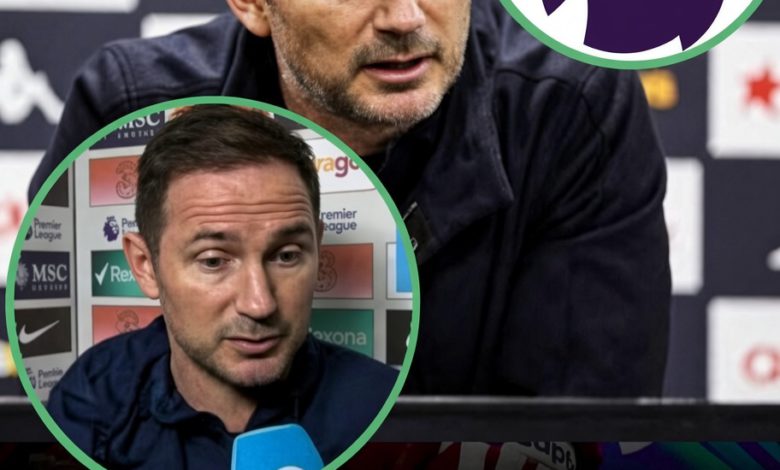
Frank Lampard is preparing to make what many Coventry City supporters would have considered an unthinkable decision ahead of Gameweek 4, with fresh data and internal analysis prompting a significant tactical shift designed to drag the Sky Blues away from the foot of the Premier League table.
After three matches without a point or a goal, the pressure on the Coventry head coach has grown steadily. Defeats by Arsenal, Hull City and Manchester City have left the newly promoted side bottom of the standings and searching for answers. Lampard, however, is not planning to stick rigidly to the approach that earned promotion last season. Instead, key performance data has convinced him that a more pragmatic and defensive-minded system is now required if the club is to climb to safety.
The unthinkable element of the decision lies in how far Lampard is prepared to move away from the proactive, possession-based style that defined Coventry’s Championship title-winning campaign. Those close to the camp suggest the head coach is ready to prioritise structure, compactness and transitional threat over sustained dominance of the ball — a clear departure from the principles that brought success in the second tier.
Data reviewed by the coaching staff has highlighted several recurring issues. Coventry have been exposed in wide areas when committing too many players forward, have struggled to protect the space behind the full-backs, and have lacked a reliable defensive screen in central midfield when the press is broken. In addition, the absence of goals has been linked not only to a lack of quality in the final third but to the team’s inability to sustain pressure high enough up the pitch without leaving dangerous gaps.
Lampard’s response is expected to involve a more compact mid-block, greater emphasis on defensive transitions, and a clearer plan for attacking in shorter, more vertical bursts rather than prolonged possession. The shape is likely to become more recognisable as a 4-2-3-1 or a narrow 4-4-2 out of possession, with the priority placed on limiting the opposition’s ability to play between the lines.
One of the most notable adjustments under consideration is the role of the double pivot. Rather than allowing both central midfielders to step forward aggressively, Lampard is understood to want one player to remain permanently disciplined, screening the back four and closing passing lanes into the feet of opposing attackers. This would represent a clear shift from the more fluid midfield rotations seen during the promotion season.
In the wide areas, the full-backs are likely to be given more conservative starting positions, particularly against teams who attack with pace and width. Overlapping will become more selective, with the emphasis placed on protecting the defensive line first and joining attacks only when the ball is secured in advanced areas. This change is designed to reduce the frequency of the counter-attacks that have hurt Coventry in the opening games.
Further forward, the data has also influenced thinking around the attacking unit. With no goals scored so far, Lampard is exploring ways to create higher-quality chances rather than simply more of them. This could involve a more direct route into the striker, earlier crosses from wide areas, and a greater willingness to commit numbers into the box when the opportunity arises. The days of patient, sideways build-up may be reduced in favour of quicker progression into the final third.
Set-pieces are another area under close scrutiny. Coventry have conceded from dead-ball situations and have offered little threat of their own. Specialist work on both defensive and attacking set-plays is expected to intensify, with the coaching staff identifying these moments as a realistic route to the first goal and first points of the season.
The psychological aspect of the change is equally important. Lampard has spoken privately about the need for the players to embrace a “survival mentality” without losing the competitive edge that brought them to the Premier League. The message being delivered in training is that results now matter more than aesthetics, and that a hard-earned 1-0 win or a hard-fought draw will be celebrated as significant steps forward.
Supporters may initially find the shift difficult to accept. Many became attached to the free-flowing football that characterised last season’s title charge. Yet the reality of Premier League life has forced a reassessment. Remaining wedded to a system that is currently yielding neither points nor goals would be a greater risk than adapting to the demands of the division.
Lampard’s willingness to make this unthinkable decision also reflects a broader maturity in his management. In previous roles he has sometimes been criticised for sticking too rigidly to an ideal. At Coventry, with the stakes clear and the data unambiguous, he appears ready to prioritise effectiveness over ideology.
The coming Gameweek 4 fixture will offer the first real evidence of how far the tactical adjustment has progressed. Whether the changes are subtle or more dramatic, the intention is clear: tighten the structure, reduce vulnerability, and create a platform from which Coventry can begin collecting the points required for survival.
Key data has been reviewed. Difficult conclusions have been reached. And Frank Lampard is prepared to act on them. The unthinkable decision is no longer a rumour — it is becoming a plan. The only question now is whether it will be enough to bring Coventry City back to safety.