Sébastien Pocognoli Under Fire After Nations League Remark as English Media Question His Stance
Sébastien Pocognoli has found himself at the centre of growing criticism following his blunt assessment of the UEFA Nations League, with his comments drawing strong reactions from sections of the European football media.
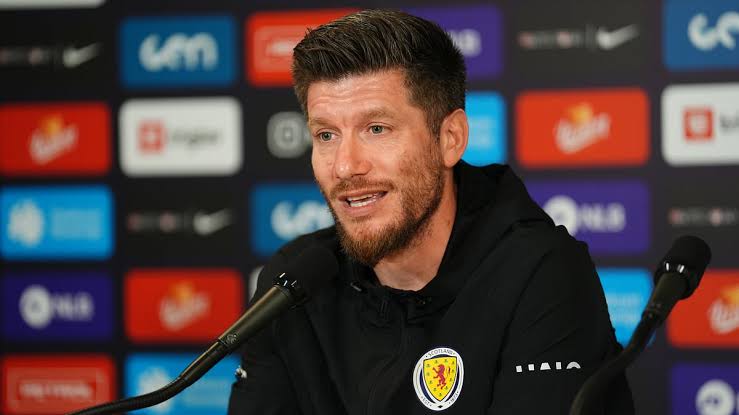
The Scotland head coach did not hide his frustration when discussing the competition after Scotland’s recent international fixture, describing the Nations League as little more than an international friendly in his personal assessment.
Pocognoli’s comments have quickly become one of the biggest talking points surrounding Scotland, with his words prompting debate about the purpose of the competition and the demands being placed on international players.
“To me this is just international friendly and nothing more,” Pocognoli reportedly said.
The Scotland boss continued by questioning whether the competition is necessary given the increasingly demanding schedule faced by professional footballers.
“It’s exhausting for players. To me this kind of league is unnecessary,” he added.
Those remarks have not gone unnoticed.
Sections of the English media have reacted strongly to Pocognoli’s comments, with some commentators questioning whether the Scotland manager’s assessment amounts to an attempt to reduce the importance of a competition after a disappointing result.
The reaction became particularly sharp because Scotland were unable to secure a victory in their latest Nations League fixture, leaving some observers questioning the timing of Pocognoli’s criticism.
One of the most repeated lines circulating among critics was that “a loser will always find an excuse to back his failure,” a phrase being used by sections of the discussion surrounding the Scotland manager.
However, that statement represents the opinion of his critics rather than an established fact about Pocognoli’s intentions.
The controversy has also opened a wider conversation about the Nations League itself.
The competition was introduced by UEFA to provide more meaningful international matches and reduce the number of traditional friendlies between European national teams. It also provides a competitive structure involving promotion and relegation, while offering a pathway connected to major tournament qualification in certain circumstances.
Pocognoli’s position appears to be that the additional competitive fixtures contribute to player fatigue without providing enough sporting value to justify the workload.
That argument is likely to resonate with players and managers who have repeatedly raised concerns about the modern football calendar.
At the same time, supporters of the Nations League argue that competitive international football is preferable to matches that have little consequence. The competition has also produced high-profile fixtures between some of Europe’s strongest national teams.
That disagreement has now placed Pocognoli in an uncomfortable position.
For Scotland, the immediate concern remains football on the pitch. The team must focus on its upcoming fixtures rather than allow the debate surrounding the manager’s comments to dominate the international camp.
The Scotland boss will therefore face questions about whether his comments were intended as a genuine criticism of the competition or whether he was simply expressing his personal view on the demands facing modern players.
The timing has certainly intensified the scrutiny.
Following Scotland’s latest result, critics have seized on Pocognoli’s words and questioned whether dismissing the Nations League as “just an international friendly” sends the wrong message to his players and supporters.
Others, however, believe the manager is entitled to question the structure of a competition that adds more international matches to an already crowded football calendar.
For now, Pocognoli’s comments have ensured that the spotlight remains firmly on Scotland.
The debate is unlikely to disappear quickly. Every subsequent Nations League fixture will provide another opportunity for journalists to revisit the manager’s controversial position, particularly if Scotland’s results fail to improve.
What began as a comment about player fatigue has therefore developed into a much broader argument about the value of the Nations League, the modern international calendar and the responsibilities of national-team managers.
Pocognoli may have intended to make his position clear, but his words have created a storm that could follow Scotland throughout the remainder of the campaign.